
San Francisco is one of those cities where getting around is part of the experience. You can ride one of its famous cable cars, walk through beautiful neighbourhoods, hop on public transport or, if you’re feeling a little more adventurous, get into a car with absolutely nobody behind the wheel.
That was exactly what I decided to do on my recent trip to San Francisco. I’d heard a lot about Waymo San Francisco, but I’d never actually been in a fully driverless car before. So, when I spotted the opportunity to try one with my friend Rhys, I was very curious to see what it was really like.
I’ll admit, getting into a car with no driver feels incredibly strange at first. But after a few minutes, it started to feel surprisingly normal. Here’s everything you need to know about riding a Waymo in San Francisco, including how it works, what it feels like and whether I think it’s worth trying.
What Is Waymo?
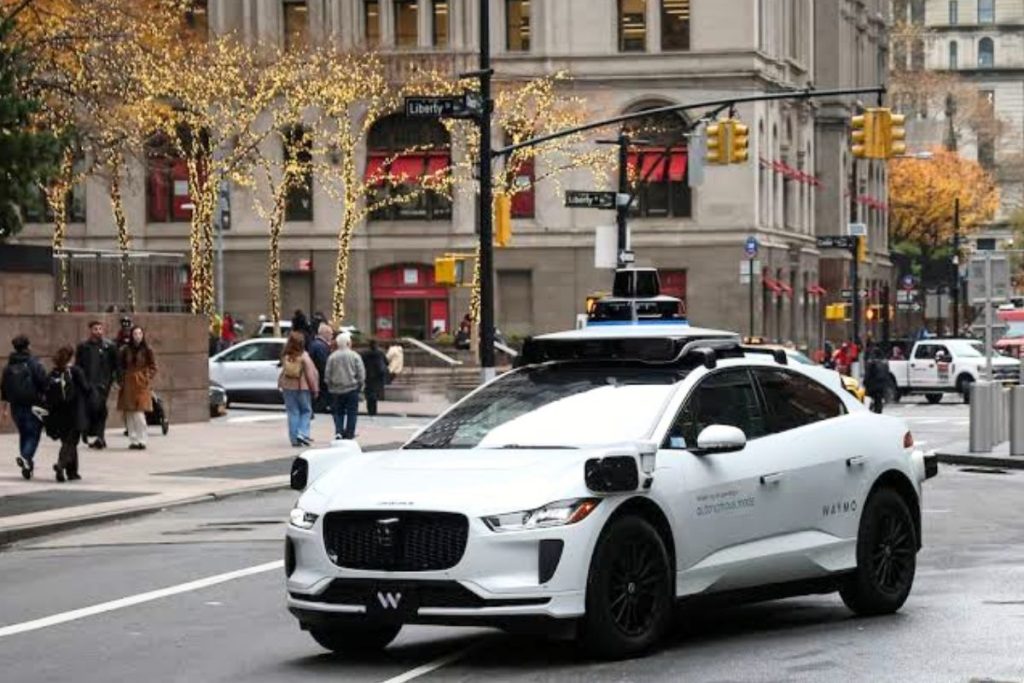
Waymo is an autonomous ride-hailing service that allows passengers to book a car without a human driver. In San Francisco, the service operates using all-electric Jaguar I-PACE vehicles equipped with Waymo’s autonomous driving technology.
Unlike a regular Uber or taxi, there isn’t anyone sitting in the driver’s seat. The Waymo Driver uses cameras, lidar, radar and other sensors to understand the road and navigate around vehicles, pedestrians, cyclists and other obstacles.
Waymo opened its San Francisco service to everyone in June 2024, so you no longer need to be part of a special testing programme to try it. And yes, you really can just get in and let the car drive you around San Francisco.
My First Waymo Ride in San Francisco
When our Waymo arrived, I genuinely didn’t know what to do with myself. We opened the doors, climbed into the back and looked towards the front of the car.
Nobody. There was no driver checking the route, no friendly hello and no awkward small talk. Just an empty driver’s seat and a car that was about to take us through San Francisco completely by itself.
We started the ride through the Waymo app, and once we hit the button to begin, the car pulled away. It was definitely one of those travel moments where you think, “How is this actually happening?”
But the funny thing was that after the first few minutes, the novelty started to wear off. We were simply sitting in the car, watching San Francisco pass by the windows. It felt much more like a normal rideshare than I expected, just without the person driving.
How Does a Driverless Waymo Work?
The technology behind it is obviously much more complicated than what passengers see, but the basic idea is quite easy to understand.
Waymo vehicles use a combination of cameras, lidar and radar to create a detailed picture of what’s happening around the car. The Waymo Driver then uses that information, along with maps and onboard computing, to plan its route and respond to the constantly changing environment.
There’s also a passenger screen inside the vehicle showing what the Waymo Driver is detecting and the route you’re taking, which I found really interesting. Instead of wondering what the car can see, you get a little window into how it is interpreting the road.
And this isn’t a small experiment anymore. Through March 2026, Waymo says its vehicles had completed more than 220 million rider-only miles without a human driver, including more than 67 million miles in the San Francisco Bay Area.
What Happens When Something Unexpected Happens?
This was actually one of the most interesting parts of my ride. At one point, we came across a traffic controller standing in the road and directing vehicles. Our Waymo wasn’t sure how to proceed, so it simply stopped. And stayed there.
Traffic started building up behind us, and I became far more anxious about holding everybody else up than I was about the car itself. We contacted support through the vehicle and were helped through the situation before continuing on our way.
It was a good reminder that driving isn’t just about following road markings and traffic lights. Cities are unpredictable, and sometimes a person needs to communicate what is happening.
Interestingly, Waymo says its remote assistance system does not involve someone sitting somewhere remotely driving the car. Instead, the Waymo Driver can request additional information from a remote assistance agent when it encounters a situation where it needs more context. The vehicle remains responsible for the driving decisions.
Is Waymo Safe?
This is probably the biggest question people have before trying a driverless car in San Francisco, and I completely understand why. Personally, I felt comfortable during my ride. The car wasn’t aggressive or erratic, and I actually found it quite cautious in the way it approached situations.
Waymo’s latest safety analysis, covering more than 220 million fully autonomous miles through March 2026, reports significantly lower rates of crashes involving serious injuries, airbag deployment and reported injuries compared with its human-driver benchmarks. Those are Waymo’s own comparisons, so they should be viewed in that context, but they do give you an idea of the amount of real-world driving the system has now completed.
For me, the most reassuring thing wasn’t that the car somehow knew exactly what to do in every situation. It was that when it encountered something it couldn’t immediately resolve, it stopped rather than taking a risky guess.
How Do You Book a Waymo in San Francisco?
Booking a Waymo is fairly straightforward. You download the Waymo app, enter your destination and request a ride. The app tells you where to meet the vehicle, and once your Waymo arrives, you use the app to unlock the doors.
Up to four passengers can ride in one vehicle. Once everyone is inside and buckled up, you start the ride from the passenger screen. You can then follow the route and see what the Waymo Driver is detecting around the vehicle.
Waymo operates 24 hours a day, seven days a week, although availability and pickup locations can vary depending on where you are and where you’re travelling.
Where Can You Take a Waymo in San Francisco?
Waymo’s San Francisco service has expanded significantly since it first launched, and the current service area stretches across the San Francisco Peninsula towards San Jose.
The service is particularly useful if you’re travelling around the city and want to avoid driving or don’t want to rely entirely on public transport.
There is also a Waymo connection to San Francisco International Airport. Service to SFO began in January 2026, initially using the Rental Car Centre, which passengers can reach via the airport’s AirTrain.
So, if you’re visiting San Francisco, Waymo is becoming a much more practical transport option rather than simply a novelty.
How Much Does a Waymo Ride Cost?
There isn’t one fixed price for a Waymo ride. The fare depends on your route and other factors, so the best way to know how much your journey will cost is to enter your destination in the app before booking.
I’d recommend comparing the fare with Uber, taxis and public transport, particularly if you’re travelling longer distances.
For me, though, there is another consideration. If you’ve never ridden in a driverless car before, the experience itself is part of the fun. So even if it isn’t always the cheapest option, taking one short ride while you’re in San Francisco can be a really memorable travel experience.
Waymo vs Uber in San Francisco
The obvious difference between Waymo and Uber is the driver, but the experience is also surprisingly different.
With Uber, you have a person behind the wheel who is responsible for navigating the city. With Waymo, the car handles the driving itself, while you sit back and enjoy the ride.
I also found Waymo surprisingly quiet. There was no conversation with a driver and no need to explain where we were going beyond entering the destination in the app.
If you’re travelling with friends, I’d definitely recommend doing your first ride together. Half the fun is watching everyone’s reaction when the car pulls away, and you realise there really is nobody driving it.
Should You Try Waymo as a Tourist?
I think you should, especially if you’re curious about technology or simply want to do something a little different in San Francisco.
You don’t need to make Waymo your main form of transportation. San Francisco is a fantastic city to explore on foot, and you should absolutely ride a cable car at least once. But adding a driverless car to the mix gives you a completely different perspective on the city.
I loved the contrast. One minute you’re riding a historic cable car that has been part of San Francisco since the 19th century, and the next you’re sitting in an electric car navigating the city with no driver at all. That pretty much sums up San Francisco for me. It’s a city where old and new seem to exist side by side.
My Verdict: Is a Waymo Ride Worth It?
Yes, I’d absolutely do it again. I went into my first Waymo ride in San Francisco expecting it to be a fun little travel experiment, but it ended up being one of the most memorable ways I’ve travelled around the city.
The first few minutes are definitely surreal. You keep looking towards the driver’s seat because your brain hasn’t quite accepted that nobody is there. But once you settle in, it becomes a surprisingly smooth and relaxing way to get around.
If you’re visiting San Francisco, I’d definitely recommend giving it a try. You can still walk the city’s beautiful streets, ride the cable cars and tick off all the classic sights, but a Waymo gives you a chance to experience a very different side of the city.
And if you want to see exactly what my first driverless ride was like, come along with me on my YouTube channel. You can also find more travel guides and inspiration over on the Travel For Phoebe blog.
You Might Also Be Interested In:
The 10 Best Places to Visit in San Francisco for First-Time Travellers