
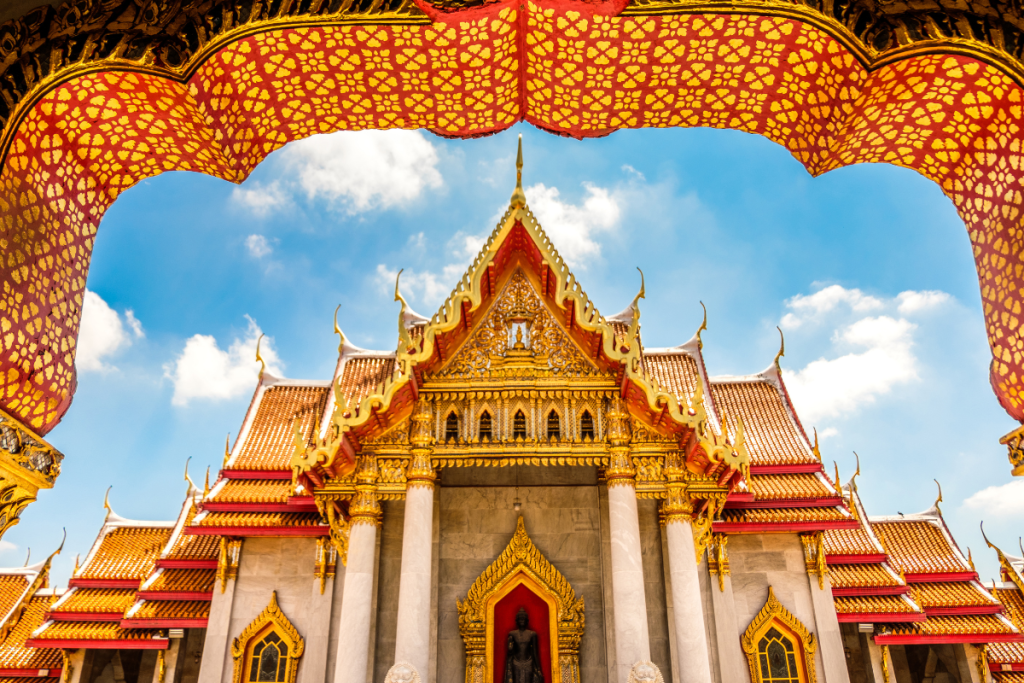
Thailand is one of those destinations that feels effortlessly diverse. You can begin your journey in a buzzing metropolis filled with temples and rooftop bars, travel north into misty mountains rich with culture and history, and end on islands where turquoise waters meet dramatic limestone cliffs. It is this variety that makes Thailand so appealing, but also what makes planning a trip slightly overwhelming. That is where a well-structured Thailand travel guide becomes essential.
Hi, I’m Phoebe Lee, the creator behind Travel For Phoebe. Thailand was one of the first destinations that truly made me fall in love with travel. It is vibrant, welcoming, and full of experiences that go far beyond the typical highlights. This Thailand travel guide is designed to help you explore Thailand with clarity, confidence, and a deeper understanding of what makes this country so special.
Top 5 Places to Visit in Thailand
Bangkok
No Thailand travel guide would be complete without Bangkok, a city that feels alive at every hour of the day. Bangkok is a fascinating mix of tradition and modernity, where centuries-old temples stand alongside skyscrapers and luxury malls.
The Grand Palace is one of the most important cultural sites in the country. Built in 1782, it served as the residence of Thai kings and remains a symbol of national heritage. Within the complex, Wat Phra Kaew houses the Emerald Buddha, one of Thailand’s most sacred religious icons.
Nearby, Wat Pho is home to the 46-metre Reclining Buddha and is also considered the birthplace of traditional Thai massage. Across the river, Wat Arun stands out with its intricate porcelain design, especially beautiful at sunset.
For a more local experience, take a longtail boat through Bangkok’s canals or visit Chatuchak Weekend Market, which features over 15,000 stalls. In the evening, Yaowarat (Chinatown) becomes one of the best places in the city to experience Thailand’s legendary street food scene.
Chiang Mai
Located in northern Thailand, Chiang Mai offers a completely different atmosphere from Bangkok. It is calmer, more cultural, and surrounded by mountains.
The city’s most iconic landmark, Wat Phra That Doi Suthep, sits at an elevation of around 1,000 metres. Reaching the temple involves climbing a staircase of over 300 steps, but the panoramic views over Chiang Mai make it worthwhile.
Within the Old City, you can explore temples such as Wat Chedi Luang, known for its partially ruined structure, and Wat Phra Singh, which showcases classic Lanna architecture. Chiang Mai is also famous for its night markets, where you can try local dishes like khao soi, a creamy coconut curry noodle soup unique to the region.
For nature lovers, Doi Inthanon National Park offers waterfalls, hiking trails, and Thailand’s highest peak at 2,565 metres. The cooler climate here provides a refreshing contrast to the rest of the country.
Phuket
Phuket is Thailand’s largest island and one of its most popular beach destinations. It is well developed, making it ideal for travellers looking for a mix of relaxation and convenience.
Patong Beach is the centre of nightlife, with Bangla Road offering bars, clubs, and entertainment. However, for a more relaxed experience, beaches like Kata Noi, Nai Harn, and Freedom Beach provide quieter settings with equally stunning views.
Phuket is also a gateway to some of Thailand’s most iconic landscapes. Day trips to the Phi Phi Islands offer dramatic limestone cliffs and crystal-clear water, while Phang Nga Bay is known for its towering rock formations, including James Bond Island.
Phuket Old Town is worth exploring for its colourful Sino-Portuguese architecture, cafés, and local markets, giving you a glimpse into the island’s cultural side. Read my article to find the best food spots in Phuket and the best places to stay.
Krabi
For raw natural beauty, Krabi is one of the most scenic regions in the country and a highlight of any Thailand travel guide.
Railay Beach is one of the most famous spots, accessible only by boat due to the surrounding limestone cliffs. It is not just a beach but an experience, offering kayaking, rock climbing, and stunning viewpoints.
Island hopping from Krabi is a must. The Four Islands Tour takes you to places like Tup Island, where sandbars connect islands during low tide, and Chicken Island, named after its unique rock formation.
Inland, the Emerald Pool and Blue Pool offer natural swimming spots surrounded by rainforest. The Tiger Cave Temple, with its 1,200-step climb, rewards visitors with one of the best panoramic views in southern Thailand.
Ayutthaya
Just 1 to 1.5 hours from Bangkok, Ayutthaya is a UNESCO World Heritage Site and one of the most important historical destinations in Thailand.
Once a thriving capital in the 14th to 18th centuries, Ayutthaya was one of the largest cities in the world at its peak. Today, its ruins tell the story of its former grandeur.
Wat Mahathat is famous for the Buddha head entwined in tree roots, while Wat Chaiwatthanaram features symmetrical towers influenced by Khmer architecture.
Exploring by bicycle is one of the best ways to move between sites, while sunset river cruises provide a peaceful way to end the day.
Top 5 Things to Do in Thailand
Explore Theme Parks and Entertainment Complexes
Thailand offers more than temples and beaches. Around Bangkok and nearby areas, modern entertainment complexes provide a different kind of experience.
Siam Amazing Park is one of Southeast Asia’s largest amusement parks, featuring water slides, roller coasters, and family attractions. Dream World offers themed zones, snow experiences, and live shows, making it ideal for families or a fun break from sightseeing.
Near Pattaya, Columbia Pictures Aquaverse is Thailand’s first Hollywood-themed water park, with rides inspired by popular films. These parks are affordable compared to Western equivalents and can easily fill a full day.
Experience Thailand’s Street Food Culture
Thailand’s street food scene is one of the most famous in the world. It is not just about affordability, but also cultural identity.
In Bangkok, Yaowarat Road is the heart of street food, especially at night. You will find grilled seafood, noodles, skewers, and desserts like mango sticky rice.
Chiang Mai offers a different flavour profile, with dishes like khao soi and northern-style sausages found in night markets such as the Sunday Walking Street.
A useful tip is to look for busy stalls with long local queues, as this often indicates freshness and quality.
Visit Unique Local Markets
Thailand’s markets are cultural experiences in themselves.
The Maeklong Railway Market is one of the most unusual, where stalls are set up directly on active train tracks and quickly moved when trains pass through.
Floating markets like Damnoen Saduak offer traditional boat-based trade, while Amphawa Floating Market provides a more relaxed and authentic alternative.
Chatuchak Weekend Market in Bangkok is one of the largest markets in the world, with thousands of stalls divided into sections for easier navigation.
Take a Thai Cooking Class
Cooking classes in Thailand often begin with a visit to a local market, where you learn about ingredients such as lemongrass, galangal, Thai basil, and kaffir lime leaves.
You will typically prepare several dishes, including pad thai, green curry, tom yum soup, and papaya salad.
These classes offer more than recipes. They provide insight into how Thai cuisine balances sweet, sour, salty, and spicy flavours, and many offer vegetarian-friendly options.
Stay in Khao Sok National Park
Khao Sok National Park offers one of Thailand’s most unique natural experiences.
Floating bungalows on Cheow Lan Lake are the main highlight, surrounded by limestone cliffs and rainforest. Activities include kayaking, jungle trekking, cave exploration, and wildlife spotting.
The park is extremely biodiverse and is often described as one of the oldest rainforests in the world. It is a peaceful escape from Thailand’s busier destinations.
Best Time to Visit Thailand
Planning your trip carefully can significantly improve your overall experience. This Thailand travel guide highlights how weather, crowds, and costs vary throughout the year, along with practical tips to help you choose the best time.
Cool Season (November to February)
This is widely considered the best time to visit Thailand. Temperatures typically range from 25 to 30°C (77 to 86°F), with lower humidity and very little rainfall. The weather is comfortable for sightseeing, exploring temples, and enjoying beaches.
However, this is also the peak tourist season. Popular destinations like Phuket, Krabi, and Bangkok can feel crowded, especially around Christmas and New Year.
Prices for hotels and flights are at their highest, so booking at least 2 to 3 months in advance is strongly recommended. If you want to avoid the heaviest crowds, consider travelling in early November or late February.
Hot Season (March to May)
The hot season is intense, with temperatures often reaching 35 to 40°C (95 to 104°F), especially in inland areas like Bangkok and Chiang Mai. The heat can feel exhausting, particularly during midday.
However, this is a great time for island travel. Coastal areas such as Phuket and Koh Samui benefit from sea breezes, making the heat more manageable.
April is also when Songkran takes place. This nationwide water festival is one of the most exciting times to visit, but it also means crowded streets and limited accommodation availability.
Travelling during this season can be more affordable than peak months, but it is important to plan activities early in the morning or later in the evening to avoid the heat.
Rainy Season (June to October)
The rainy season brings frequent showers, but they are usually short and intense rather than all-day rain. Temperatures remain warm, around 25 to 32°C (77 to 90°F).
This is the low season, which means fewer tourists and significantly lower accommodation prices. It is also when Thailand’s landscapes are at their greenest, especially in northern regions.
However, some island destinations, particularly in the Andaman Sea, may experience rough seas, which can affect ferry schedules and tours. If you are planning island travel during this time, consider destinations in the Gulf of Thailand such as Koh Samui, which often have better weather.
A key tip is to build flexibility into your itinerary, allowing you to adjust plans based on weather conditions.
Pro Travel Tips for Thailand
- Use Grab for taxis and food delivery, as it provides transparent pricing and avoids the need for negotiation.
- In Bangkok, use the BTS Skytrain and MRT subway to avoid traffic, especially during rush hours when roads can become heavily congested.
- When using tuk-tuks, always agree on a price before starting the journey, and avoid drivers offering unusually cheap rides that include “free stops”.
- Download offline maps on Google Maps, as some smaller streets and local areas can be confusing to navigate.
- Use local SIM cards or eSIMs for reliable internet, widely available at airports and convenience stores like 7-Eleven.
- When visiting temples, carry a lightweight scarf or shawl to quickly cover shoulders if needed.
- Avoid booking tours through random street vendors. Instead, use reputable platforms or your accommodation to ensure quality and safety.
- If you are travelling between cities, night trains can save both time and accommodation costs, especially on routes like Bangkok to Chiang Mai.
- Always keep small denominations of Thai Baht, as many street vendors and taxis do not accept large notes.
Frequently Asked Questions About Travelling to Thailand
Is Thailand expensive to travel in?
Thailand is one of the most budget-friendly destinations in Southeast Asia. Budget travellers can comfortably spend around 30 to 60 USD per day, including accommodation in hostels or budget hotels, street food, and local transport. Mid-range travellers typically spend 70 to 150 USD per day, allowing for boutique hotels, domestic flights, and organised tours.
Luxury travel is also widely available, especially in Phuket and Koh Samui, with high-end resorts and private experiences.
How do you get around Thailand?
Thailand has a well-developed transport network. Domestic flights are the fastest option for long distances, such as Bangkok to Phuket or Chiang Mai. Trains are a popular and scenic option, especially sleeper trains for overnight journeys. Buses are widely available and budget-friendly.
Within cities, ride-hailing apps like Grab are the most convenient. In Bangkok, the BTS Skytrain and MRT subway are the fastest ways to avoid traffic. For island travel, ferries and speedboats connect major destinations.
How long should you spend in Thailand?
A well-paced itinerary based on a Thailand travel guide typically ranges from 10 days to three weeks. A 10 to 14-day trip allows you to cover Bangkok, Chiang Mai, and one island destination. If you have three weeks, you can explore multiple islands, national parks, and lesser-known destinations at a more relaxed pace.
Is Thailand safe for solo travellers?
Thailand is generally very safe for travellers, including solo travellers. Violent crime is rare, but petty theft can occur in crowded areas such as markets and public transport.
It is important to stay aware of your surroundings, avoid leaving valuables unattended, and be cautious when accepting offers from strangers. Using reputable transport and booking services also reduces risks significantly.
What are some hidden gems in Thailand?
Beyond the popular destinations, places like Pai offer a laid-back mountain atmosphere with hot springs and scenic viewpoints. Koh Lanta is ideal for quieter beach experiences, while Koh Yao Noi offers stunning views of Phang Nga Bay without the crowds.
These destinations provide a more relaxed and authentic side of Thailand.
Plan Your Trip with This Thailand Travel Guide
Thailand is a destination that offers endless possibilities, whether you are travelling for culture, food, adventure, or relaxation. The more you explore, the more diverse your experience becomes.
This Thailand travel guide is designed to help you take the first step toward planning an incredible journey. If you’re looking for more in-depth guides, personalised travel tips, and real travel experiences, be sure to check out my blog, Travel For Phoebe. I also share travel videos and destination insights on my YouTube channel, where you can see these places come to life and get practical tips before you go.
Use this guide as your inspiration, start mapping out your trip, and get ready to experience the magic of Thailand for yourself.
You Might Also Be Interested In:
10 Unique Things to Do in Phuket, Thailand That Made Me See the Island Differently
The best things to do in Chiang Rai