
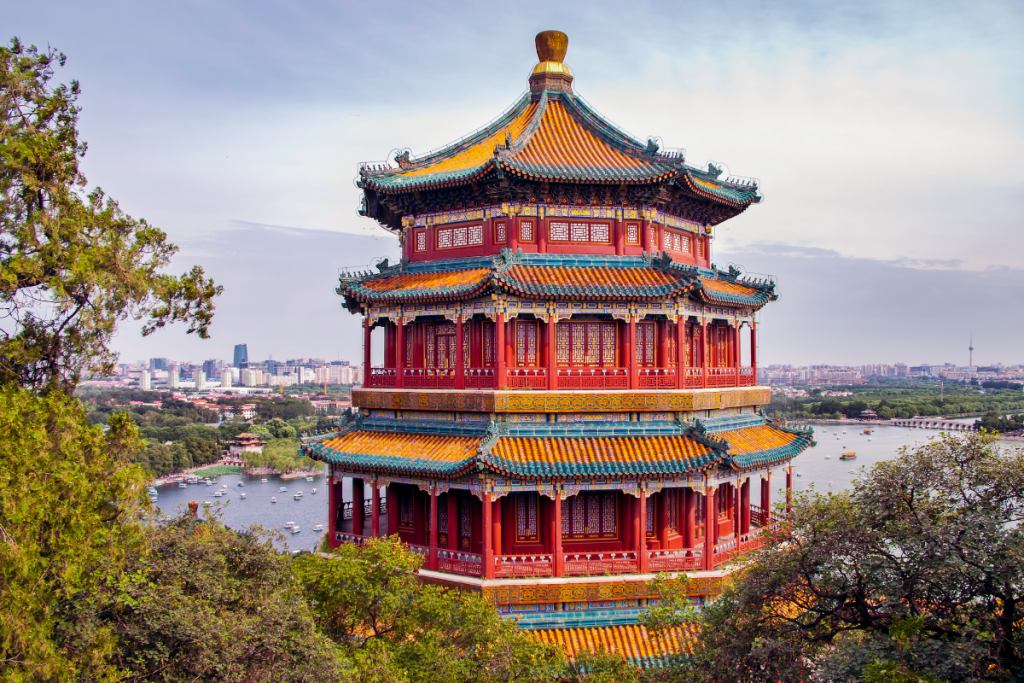
China is one of those destinations that feels almost impossible to summarise in a single trip. It’s a country of immense scale, where ultra-modern cities exist alongside ancient traditions, and where landscapes shift from karst mountains and rice terraces to deserts and megacities within a single journey. Planning your first visit can feel overwhelming, but that’s exactly why a well-structured China travel guide is essential.
Hi, I’m Phoebe Lee, the creator behind Travel For Phoebe. Travelling through China was one of the most eye-opening experiences I’ve had. It challenged me, surprised me, and pushed me outside my comfort zone in the best possible way. This China travel guide is designed to help you navigate that experience with clarity and confidence.
Whether you’re visiting for the first time or planning a deeper journey, this guide will walk you through the must-visit places, unique experiences, best travel seasons, and practical tips, so you can make the most of your time in China.
Top 5 Places to Visit in China
Beijing
No China travel guide would be complete without starting in Beijing, a city that represents the heart of China’s imperial history and political power. Beijing is vast and can feel intense at first, but it rewards travellers with some of the most significant historical landmarks in the world.
The Forbidden City is one of the most impressive palace complexes globally, spanning over 180 acres and containing nearly 1,000 buildings. It once housed emperors of the Ming and Qing dynasties, and walking through its courtyards gives you a real sense of the scale and power of ancient China.
Just outside the city lies one of the most iconic UNESCO World Heritage Sites, the Great Wall of China. Sections like Mutianyu are ideal for travellers, offering restored pathways, fewer crowds than Badaling, and panoramic mountain views.
Beijing also offers rich cultural experiences, from exploring traditional hutongs (narrow alleyways) to trying Peking duck in historic restaurants. It’s a city where history isn’t just preserved, it’s still part of daily life.
Shanghai
If Beijing represents China’s past, Shanghai represents its future. As you move through Shanghai, you’ll notice a completely different atmosphere, sleek, fast-paced, and incredibly international.
The contrast is most visible along The Bund, where colonial-era buildings face the futuristic skyline of Pudong. The skyline is dominated by landmarks such as the Shanghai Tower, which rises over 600 metres and offers one of the highest observation decks in the world.
Beyond the modern architecture, Shanghai still holds onto its traditional roots. Yuyuan Garden, with its classical Chinese landscaping, ponds, and pavilions, offers a peaceful escape from the city’s energy.
Any well-rounded China travel guide should include Shanghai, not just for sightseeing, but to understand how rapidly China is evolving.
Zhangjiajie
For something completely different, Zhangjiajie National Forest Park is one of the most surreal landscapes you’ll encounter anywhere in the world. Thousands of towering sandstone pillars rise from the forest floor, often surrounded by mist, creating a dreamlike setting.
This region forms part of the Wulingyuan Scenic Area, a UNESCO-listed landscape that inspired the floating mountains in Avatar. The park features multiple viewpoints, cable cars, and hiking trails that allow you to explore the scenery from different perspectives.
One of the most talked-about attractions is the glass bridge suspended over a deep canyon, offering both incredible views and a bit of an adrenaline rush.
Including Zhangjiajie in your China travel itinerary adds a completely different dimension to your trip, one focused on nature and adventure.
Xi’an
The historic city of Xi’an is one of China’s oldest cities and was once the starting point of the Silk Road. It’s a destination where history feels deeply embedded in the landscape.
The main highlight is the Terracotta Army, a vast collection of life-sized clay soldiers buried to guard China’s first emperor. Discovered in 1974, this archaeological site remains one of the most important in the world, with thousands of figures still being uncovered.
Xi’an also has one of the best-preserved ancient city walls in China. Cycling along the top provides a unique perspective of the city’s layout, blending historic architecture with modern development.
Food lovers will also appreciate Xi’an’s Muslim Quarter, where street food reflects the city’s position as a cultural crossroads.
Guilin and Yangshuo
Southern China’s Guilin and Yangshuo are often featured in any China travel guide for their breathtaking natural scenery.
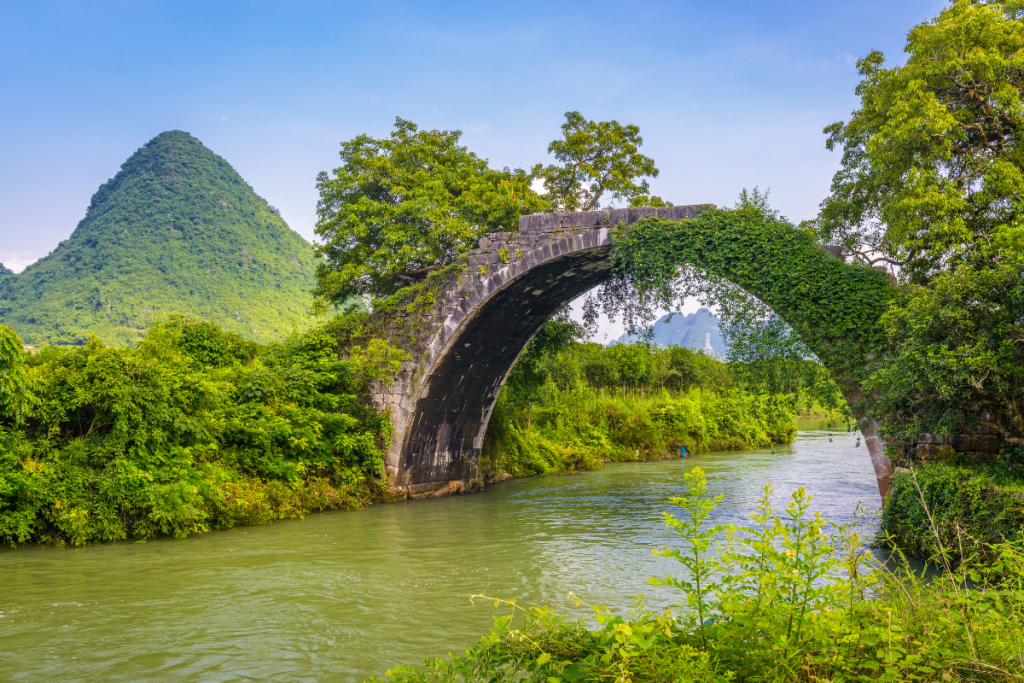
The region is famous for its karst mountains, sharp limestone peaks that rise dramatically from the ground. A cruise along the Li River between Guilin and Yangshuo is considered one of the most scenic journeys in China, passing through rural landscapes, bamboo groves, and small villages.
Yangshuo itself offers a slower pace of travel. Cycling through the countryside, exploring caves, or simply enjoying the view from a riverside café makes it a perfect place to unwind after visiting China’s larger cities.
Top 5 Things to Do in China
Ride China’s High-Speed Trains
One of the most practical experiences highlighted in any China travel guide is travelling on China’s high-speed rail network. Trains regularly exceed 300 km/h, connecting cities like Beijing, Shanghai, and Xi’an efficiently.
The experience is smooth, punctual, and often more convenient than flying when you consider airport security and transfer times.
Explore Local Street Food Scenes
Street food is an essential part of any China travel itinerary. Each region has its own specialities, from dumplings in the north to spicy Sichuan dishes in the west.
Night markets are the best places to explore these flavours, offering everything from skewers and noodles to regional delicacies you may not have encountered before.
Experience a Traditional Tea Ceremony
Tea is deeply embedded in Chinese culture, and participating in a tea ceremony offers insight into its history and rituals. In cities like Hangzhou, known for its Longjing tea, you can learn how tea is grown, prepared, and appreciated.
This cultural experience adds depth to your understanding of daily life in China.
Cruise the Yangtze River
A cruise along the Yangtze River provides a completely different way to experience China. Multi-day cruises pass through dramatic landscapes such as the Three Gorges, offering views that are difficult to access by road.
It’s a slower, more reflective way to travel compared to fast-paced city itineraries.
Visit Ancient Water Towns
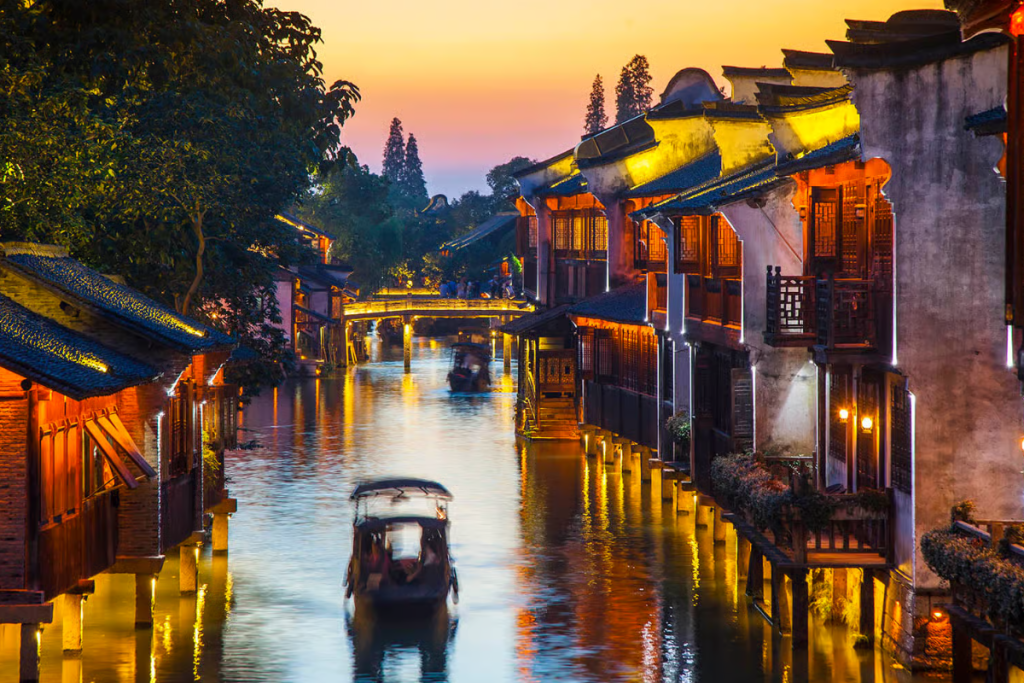
Ancient water towns such as Zhujiajiao and Suzhou provide a glimpse into traditional Chinese architecture and lifestyle.
Stone bridges, canals, and historic houses create a peaceful atmosphere that contrasts with China’s major cities.
Best Time to Visit China
Choosing the best time to visit China depends largely on your travel style, preferred weather, and the regions you plan to explore. Due to the country’s vast size and diverse climate, each season offers a different experience, making timing an important part of any well-planned China travel itinerary.
Spring (March to May)
Spring is one of the best seasons to visit China. Temperatures across much of the country range from 15–25°C (59–77°F), making it comfortable for sightseeing.
Flowers bloom across cities and countryside areas, and major attractions are less crowded compared to summer. Travel costs are moderate, except during public holidays.
Summer (June to August)
Summer brings high temperatures and humidity, especially in cities like Beijing and Shanghai, where averages reach 30–38°C (86–100°F).
This is peak travel season for domestic tourism, so expect larger crowds and higher accommodation prices. However, mountainous regions such as Zhangjiajie offer cooler conditions.
Autumn (September to November)
Autumn is widely considered the ideal season in most China travel guide recommendations. Temperatures range from 18–28°C (64–82°F), with clear skies and comfortable conditions.
Crowds decrease after summer, and landscapes become particularly scenic with autumn colours. Prices also become more reasonable, making this one of the best times to visit.
Winter (December to February)
Winter can be cold, particularly in northern China, where temperatures drop to -5 to 5°C (23–41°F). However, southern regions remain milder.
This is the least crowded time to travel, and accommodation prices are often lower. The major highlight is the Chinese New Year, though travel during this period can be extremely busy.
Pro Travel Tips for China
- Always download a reliable VPN before arrival if you plan to access apps like Google, Instagram, or YouTube, as these are restricted in China.
- Carry both cash and mobile payment apps such as Alipay or WeChat Pay, as digital payments are widely used even for small purchases.
- Keep your passport accessible at all times because it is required for hotel check-ins, train travel, and certain attractions.
- Use translation apps regularly, as English is not widely spoken outside major cities.
- Book high-speed train tickets and major attractions in advance, especially during weekends and holidays.
- Expect security checks at train stations and tourist sites, so allow extra time when travelling between destinations.
- Be mindful of local etiquette, such as not sticking chopsticks upright in rice and offering items with both hands.
- Stay aware of scams in tourist-heavy areas, such as unofficial guides or tea ceremony scams targeting visitors.
Frequently Asked Questions About Travelling to China
Is China expensive to travel in?
China is relatively affordable depending on your travel style. Budget travellers can spend around $40–70 per day, while mid-range travellers typically spend $80–150.
How do you get around in China?
High-speed trains are the most efficient way to travel between major cities, while metros and taxis make it easy to navigate urban areas.
How long should you spend in China?
Most travellers spend between 10 days and three weeks exploring multiple regions covered in a typical China travel itinerary.
Is China safe for travellers?
China is generally safe with low levels of violent crime. Basic precautions, such as staying aware in crowded areas, are usually sufficient.
What are some hidden gems in China?
Destinations such as Chengdu, Lijiang, and Yunnan offer incredible culture, food, and scenery with fewer crowds.
Plan Your Journey with This China Travel Guide
China is a destination that rewards curiosity and patience. It’s not always the easiest place to travel, but that’s exactly what makes it so memorable. Every city, landscape, and cultural experience adds another layer to your understanding of the country.
If you’re planning your journey and want more in-depth itineraries, destination guides, and practical travel advice, you can explore more on my blog, Travel For Phoebe. I also share detailed travel experiences and videos on my YouTube channel, where you can see what each destination is really like before you go.
Take your time with China, because the more you explore, the more it reveals.
You Might Also Be Interested In:
The 10 Most Unique Things to Do in Chengdu, China That Most Tourists Miss